
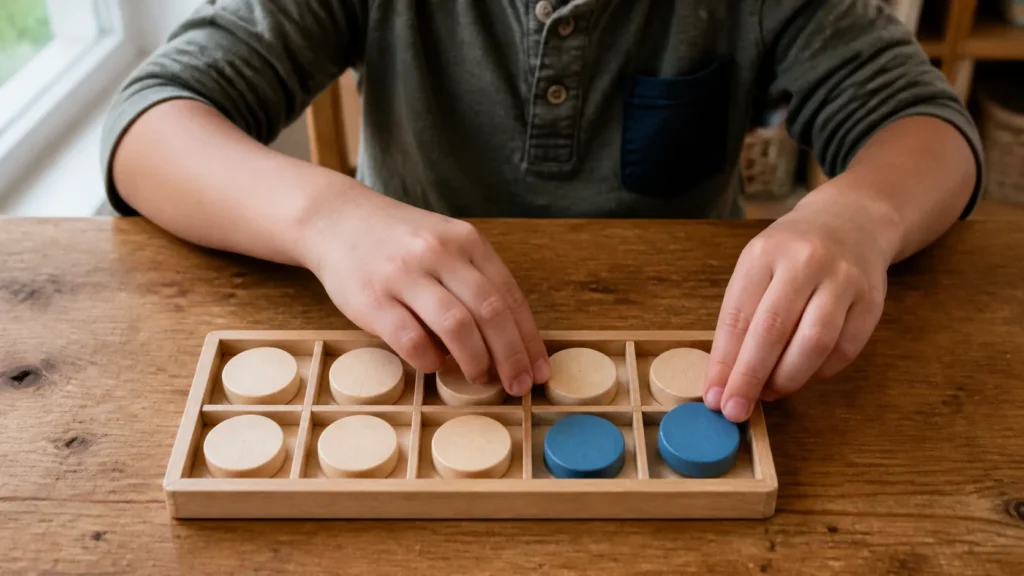
When kindergarten children first learn addition, they often count every finger or object from one. This concrete method is useful, but it can become slow when the numbers get larger.
The make ten strategy gives children a more efficient way to solve addition facts. Instead of counting every object, they complete a group of ten first and then add what remains.
For example, consider 8 + 4.
Eight needs two more to become ten. We can break four into two and two, move one group of two to the eight, and think:
8 + 2 = 10, then 10 + 2 = 12.
This strategy helps children see how numbers can be broken apart and recombined without changing the total. It is also Stage 8 of our Kindergarten Mind Computation Using Fingers learning sequence.
What Is the Make Ten Strategy?
The make ten strategy is an addition method that changes one addend into 10.
A child:
- looks at the first addend;
- decides how many more it needs to make 10;
- breaks the second addend into two parts;
- moves the needed part to complete 10; and
- adds the remaining part to 10.
For 9 + 5:
- Nine needs one more to make ten.
- Break five into one and four.
- Combine nine and one: 9 + 1 = 10.
- Add the remaining four: 10 + 4 = 14.
Therefore, 9 + 5 = 14.
Why Is Ten Such a Helpful Number?
Our number system is organized in groups of ten. Children see ten in two full hands, a complete ten-frame, and the transition from single-digit to two-digit numbers.
Adding to ten first provides a stable reference point. Facts such as 10 + 2, 10 + 4, and 10 + 7 are usually easier to understand than counting on from eight or nine one number at a time.
Making ten also builds skills that children will use later when working with place value, larger addition problems, and mental computation.
Skills Children Need Before Learning Make Ten
The strategy combines several earlier skills. Before introducing it, check whether the child can:
- recognize numbers to 10;
- count small groups accurately;
- show quantities with fingers;
- understand that two parts can make a whole;
- recall or build number bonds to 10;
- add small numbers; and
- break a number into smaller parts.
If these skills are still developing, review the site’s Number Bonds to 10 Worksheets before expecting the child to solve make-ten problems mentally.
How to Teach Make Ten Using Fingers
Fingers are especially helpful because two full hands show ten clearly.
Example: 8 + 4
Step 1: Show eight
Hold up eight fingers. The child can see that two fingers are still folded.
Step 2: Ask what eight needs
Ask, “How many more fingers would make ten?”
The answer is two.
Step 3: Break apart four
Explain that four can be separated into two and two.
Step 4: Complete ten
Use two from the four to raise the two folded fingers. There are now ten visible fingers.
Step 5: Add what remains
Two from the original four remain. Think 10 + 2 = 12.
Say the complete strategy aloud:
Eight needs two to make ten. Four is two and two. Ten plus two is twelve.
Consistent language helps children remember the sequence.
How to Teach Make Ten With Counters
Some children understand the movement of the numbers more clearly with physical objects.
You will need:
- ten small counters, blocks, bottle caps, or other safe objects;
- several additional counters; and
- two work areas or a simple ten-frame.
For 7 + 5:
- Place seven counters in the first area.
- Place five counters in the second area.
- Ask how many counters the group of seven needs to become ten.
- Move three counters from the second group to the first.
- Count the two counters remaining in the second group.
- Say, “Ten and two make twelve.”
The counters have moved, but none were added or removed. This shows that decomposing and recombining numbers does not change the total.
Connect Make Ten to Number Bonds
Number bonds tell children what each number needs to reach ten.
| Number | Needs this many to make 10 |
|---|---|
| 1 | 9 |
| 2 | 8 |
| 3 | 7 |
| 4 | 6 |
| 5 | 5 |
| 6 | 4 |
| 7 | 3 |
| 8 | 2 |
| 9 | 1 |
Children do not need to memorize the entire table before trying the strategy. They can use their fingers or a ten-frame to find the missing part.
Over time, quick recall of these number bonds makes the make ten strategy much faster.
Worked Make Ten Examples
6 + 7
Six needs four to make ten.
Break seven into four and three:
- 6 + 4 = 10
- 10 + 3 = 13
Therefore, 6 + 7 = 13.
7 + 6
Seven needs three to make ten.
Break six into three and three:
- 7 + 3 = 10
- 10 + 3 = 13
Therefore, 7 + 6 = 13.
8 + 5
Eight needs two to make ten.
Break five into two and three:
- 8 + 2 = 10
- 10 + 3 = 13
Therefore, 8 + 5 = 13.
9 + 3
Nine needs one to make ten.
Break three into one and two:
- 9 + 1 = 10
- 10 + 2 = 12
Therefore, 9 + 3 = 12.
8 + 8
Eight needs two to make ten.
Break the second eight into two and six:
- 8 + 2 = 10
- 10 + 6 = 16
Therefore, 8 + 8 = 16.
This fact can also be solved using the doubles strategy. Encourage children to notice that more than one correct strategy may be available.
Six Make Ten Activities for Kindergarten
1. Complete the Hands
Show six, seven, eight, or nine fingers. Ask the child to tell how many folded fingers must be raised to make ten.
After the child answers, raise those fingers and repeat the number bond aloud.
2. Fill the Ten-Frame
Place a small number of counters in a ten-frame. Ask the child to fill the empty spaces using counters from a second group.
Count the leftover counters and combine them with ten.
3. Make Ten Card Pairs
Write the numbers 1 through 9 on separate cards. Let the child match pairs that make ten:
- 1 and 9;
- 2 and 8;
- 3 and 7;
- 4 and 6; and
- 5 and 5.
4. Roll, Build, and Complete
Roll a standard number die. Build that number with counters, then ask how many more are needed to make ten.
For a greater challenge, use two dice and decide whether the resulting addition fact can be solved by making ten.
5. Find the Hidden Part
Place ten counters on the table and cover some with a cup or paper. Ask how many are hidden.
This game strengthens the number bonds needed for making ten.
6. Make Ten Story Problems
Use short everyday stories:
Ana has eight crayons. Her teacher gives her five more. How many crayons does she have now?
Build eight, move two from the group of five to make ten, and count the three remaining crayons. The answer is 13.
A Simple Five-Day Practice Plan
Short, repeated practice is more manageable than one long lesson.
| Day | Activity | Main goal |
|---|---|---|
| Monday | Complete finger patterns to 10 | Identify the missing part |
| Tuesday | Match number-bond cards | Recall partners of 10 |
| Wednesday | Fill a ten-frame from a second group | Move the needed amount |
| Thursday | Solve 7+, 8+, and 9+ examples | Apply the strategy |
| Friday | Explain one problem aloud | Show understanding |
Practice for approximately five to ten minutes. Stop before the child becomes tired or frustrated.
Download the Free Make Ten Worksheet
Help your child practise completing ten with this free, printable A4 worksheet.
How Make Ten Connects to Earlier Strategies
The make ten strategy does not replace every other addition method. It becomes another tool the child can choose.
Finger Addition
Children first learn that addition combines quantities. The Finger Addition Worksheets provide this concrete foundation.
Counting On
Children then begin with the larger addend instead of recounting everything. Review the Counting On Worksheets when a learner still starts every problem at one.
Doubles and Near Doubles
Equal and almost-equal groups give children remembered helper facts. The Doubles and Near Doubles Worksheets are Stage 7 of the finger-math sequence.
Make Ten
Children now break apart one addend to complete a group of ten. This requires flexible number relationships rather than one-by-one counting.
Common Mistakes and How to Help
The child does not know how many are needed
Return to fingers or a ten-frame. Let the empty spaces show the missing part instead of giving the answer immediately.
The child moves the correct amount but forgets the remainder
Keep the second group visible and physically separated. After completing ten, point to what remains and ask, “What do we still need to add?”
The child changes the total while moving counters
Count all objects before and after the move. Emphasize that the same counters are being rearranged, not removed.
The child counts from one again
Allow the child to check by counting, then repeat the make-ten steps. Strategy use develops gradually and should not become a source of pressure.
The child tries to make ten with every addition fact
Explain that make ten is especially helpful when an addend is close to ten, such as 7, 8, or 9. A simpler strategy may work better for a fact such as 3 + 2.
Questions to Ask During Practice
Use questions that reveal the child’s thinking:
- Which number is closest to ten?
- How many more does it need?
- How can we break apart the other addend?
- What part will move to complete ten?
- What amount remains?
- What is ten plus the remaining amount?
- Could another strategy solve this fact?
Avoid asking only, “What is the answer?” The explanation shows whether the child understands the strategy or guessed.
Frequently Asked Questions
Is the make ten strategy suitable for kindergarten?
Yes, when it is introduced with fingers, counters, or ten-frames and the child already understands basic number bonds. Some learners may encounter the strategy later depending on their curriculum and readiness.
Does my child need to memorize number bonds to 10 first?
Not completely. Visual models can help the child find each missing part. Regular number-bond practice will make the strategy faster over time.
What addition facts work best for make ten?
Facts containing 7, 8, or 9 are particularly useful because those numbers need only one, two, or three more to become ten.
Is make ten the same as counting on?
No. Counting on begins at one addend and counts forward. Make ten breaks apart the other addend, completes ten, and then adds the remainder.
Can a child use doubles instead?
Sometimes. For 8 + 8, double eight may be the quickest strategy. Encourage children to compare strategies and choose one they understand.
What should I do if the strategy causes confusion?
Return to concrete objects and use smaller examples. Review number bonds to 10 before moving back to abstract equations.
Final Thought
The make ten strategy helps children see addition as flexible. Numbers can be separated and recombined in useful ways while the total remains the same.
Begin with fingers and counters, repeat the number bonds to ten, and use clear language for each step. As the patterns become familiar, children can start picturing the completed ten mentally instead of moving every object.
Continue exploring the complete Kindergarten Mind Computation Using Fingers program for the full progression from finger counting to mental math.

Will Gab is the creator of Arianne Learning Printables. He started designing worksheets to support his daughter’s kindergarten learning journey. What began as a personal project has grown into a free educational resource for parents, teachers, and children around the world.
Will Gab continues to develop printable activities based on the skills young children need as they prepare for kindergarten and early elementary school.
Related Worksheets:
 Number Bonds to 5 Worksheets for Kindergarten (Free Printable Finger Math Activities)
 Number Bonds to 10 Worksheets for Kindergarten (Free Printable Finger Math Activities)
 Finger Addition Worksheets Within 5 and 10 for Kindergarten
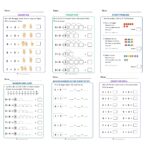 Counting On Worksheets for Kindergarten (Addition Within 10 Using Fingers)
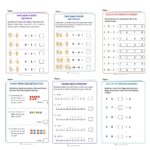 Finger Subtraction Worksheets Within 10 for Kindergarten
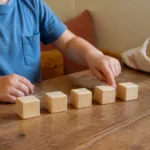 Doubles and Near Doubles Worksheets for Kindergarten (Stage 7 Finger Math)
Pingback: Hidden Fingers Worksheets for Kindergarten: Stage 9 Mental Math - Arianne Learning Printables
Pingback: Ten-Frame Number Bonds to 10 Worksheets for Kindergarten - Arianne Learning Printables