
Once children can count and understand number bonds, they are ready to learn a faster way to solve addition problems. These Counting On Worksheets help kindergarten students develop one of the most important early math strategies—counting on.
Instead of counting every object from one, children learn to start with the larger number and count forward. This simple strategy improves speed, builds confidence, and prepares young learners for mental math.
As Stage 5 of our Kindergarten Mind Computation Using Fingers program, these worksheets guide children from finger counting toward true mental computation.
What Is the Counting On Strategy?
The counting on strategy teaches children to begin with the larger number and count forward by the smaller number.
Instead of counting every finger again, children only count the extra fingers.
Example
4 + 3
❌ Count All
1, 2, 3, 4…
5, 6, 7
✔ Count On
Start at 4
Count:
5
6
7
Answer:
7
This method is faster and helps children think more efficiently.
Why Are Counting On Worksheets Important?
Learning through Counting On Worksheets helps children:
- Develop mental math skills
- Add numbers more quickly
- Build confidence in mathematics
- Strengthen number sense
- Improve problem-solving skills
- Reduce dependence on counting every object
- Prepare for higher-level addition and subtraction
This strategy is widely taught because it encourages children to think about numbers rather than simply counting.
Why Use Fingers for Counting On?
Fingers are a natural learning tool for young children.
Children already understand finger counting from the earlier stages of this program. Now they use their fingers differently.
Instead of counting all the fingers, they:
- Say the larger number.
- Raise the smaller number of fingers.
- Count forward.
- Write the answer.
Eventually, children no longer need their fingers because they visualize the counting process mentally.
Worksheet Directions
Each worksheet follows the same easy instructions:
Directions:
Start with the bigger number. Count on using your fingers. Write the answer in the box.
Example:
5 + 2 = □
Start at 5
Count on:
6
7
Write:
7
What’s Included in This Worksheet Pack?
These printable Counting On Worksheets include seven engaging activities.
1. Count On
Children begin with the larger number and count forward using their fingers before writing the answer.
This activity builds confidence and introduces the counting on strategy.
2. Finger Hop
Students imagine their fingers “hopping” forward one number at a time.
This helps children understand forward counting and addition.
3. Number Line Jump
Children use a number line to make jumps from the starting number.
This visual activity strengthens number sequencing.
4. Flash Card Race
Students solve quick addition problems using the counting on strategy.
Speed drills help build automatic recall.
5. Story Problems
Children apply counting on to everyday situations.
Example:
Emma has 5 apples.
She gets 2 more.
How many apples does she have now?
This develops mathematical reasoning.
6. Which Number Do We Start With?
Children circle the larger number before solving the addition problem.
This reinforces the most important rule of the counting on strategy.
7. Count On Drill
A mixed review page gives students additional practice with addition within 10.
Repeated practice improves fluency and accuracy.
Learning Objectives
After completing these Counting On Worksheets, children will be able to:
- Start with the larger number
- Count forward correctly
- Solve addition within 10
- Improve calculation speed
- Build mental computation skills
- Develop confidence in mathematics
Stage 5 of the Kindergarten Mind Computation Using Fingers Program
Our program teaches mental math one step at a time.
Stage 1 – Number Recognition and Finger Counting
Children learn to recognize numbers and represent them using their fingers.
Recommended practice:
- Finger Counting Worksheets
- Counting Worksheets
- Number Matching Worksheets
Stage 2 – Number Bonds to 5
Children discover different number combinations that make five.
Stage 3 – Number Bonds to 10
Children learn number partners that make ten, preparing them for faster addition.
Stage 4 – Finger Addition Within 5 and 10
Children count fingers, write the answer, and complete addition equations using visual models.
Stage 5 – Counting On Strategy
(Current Lesson)
Children now:
- Start with the larger number.
- Count forward.
- Use fewer finger movements.
- Solve addition within 10 more efficiently.
This stage bridges the gap between finger counting and mental computation.
Tips for Parents and Teachers
You can make learning even more enjoyable by:
- Practicing for 10 minutes each day
- Using real fingers before worksheets
- Playing quick addition games
- Using flashcards
- Encouraging children to explain their thinking
- Celebrating small successes
Short, consistent practice sessions produce the best results.
Continue Learning
After mastering the counting on strategy, children are ready for:
- Stage 6 – Finger Subtraction
- Stage 7 – Doubles and Near Doubles
- Stage 8 – Make Ten Strategy
- Stage 9 – Hidden Fingers
- Stage 10 – Mental Computation Without Fingers
Each stage builds upon the previous one to develop strong mental math skills.
Related Printable Math Resources
You may also like these free printable worksheets:
- Finger Counting Worksheets for Kindergarten
- Counting Worksheets
- Number Matching Worksheets
- Number Bonds Worksheets
- Addition Worksheets
- Kindergarten Addition Worksheets
- Adding with Pictures Worksheets
- Beginning Addition Worksheets
- Subtraction Worksheets
- Number Tracing Worksheets
- Tracing Numbers 1–5
- Tracing Numbers 6–10
These resources provide additional practice for preschool and kindergarten learners.
Frequently Asked Questions
What is the counting on strategy?
The counting on strategy teaches children to begin with the larger number and count forward instead of counting every object from one.
What age should children learn counting on?
Most children between 5 and 6 years old are ready after they understand number bonds and simple addition.
Why is counting on better than counting all?
Counting on is faster, more efficient, and helps children develop mental computation skills that will support future math learning.
Do children still need to use their fingers?
Yes. Fingers provide a visual support during learning. As children practice, they naturally rely on their fingers less and begin solving problems mentally.
These Counting On Worksheets help kindergarten children develop an essential addition strategy that leads to faster and more accurate mental math. By learning to start with the larger number, count forward, and write the answer, children build confidence and strengthen their understanding of numbers.
With regular practice, this strategy becomes automatic, making future lessons in subtraction, doubles, and advanced mental computation much easier. Download these free printable worksheets and help your young learner take the next step toward becoming a confident mathematician.

Will Gab is the creator of Arianne Learning Printables. He started designing worksheets to support his daughter’s kindergarten learning journey. What began as a personal project has grown into a free educational resource for parents, teachers, and children around the world.
Will Gab continues to develop printable activities based on the skills young children need as they prepare for kindergarten and early elementary school.
Related Worksheets:
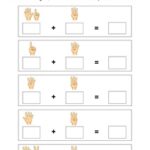 Finger Addition Worksheets Within 5 and 10 for Kindergarten
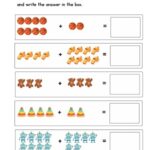 Beginning Addition Worksheets – Count and Add Pictures | Preschool & Early Elementary Math
 Number Bonds to 5 Worksheets for Kindergarten (Free Printable Finger Math Activities)
 Number Bonds to 10 Worksheets for Kindergarten (Free Printable Finger Math Activities)
 Let’s Practice Subtraction: A Beginner’s Guide Using Pictures for Kids
 Master Phonics with Free CVC Short E Words Worksheets