
If you’ve ever searched how to prepare my child to be good at math, you’re not alone.
Many parents worry when their child struggles with numbers or loses interest during math lessons. Some even wonder if their child simply isn’t “a math person.”
The truth is that every child can become good at math with the right approach. Children don’t need to be born with special math talent. They need encouragement, enjoyable learning experiences, and opportunities to practice in everyday life.
In this guide, you’ll discover 15 simple secrets that can help your child build confidence, enjoy learning, and develop strong math skills that will last a lifetime.
1. Make Math Fun Instead of Stressful
The biggest secret to raising a child who loves math is simple: make learning enjoyable.
If math always feels like homework, children quickly lose interest. Instead, turn math into a game.
Play counting games, use toys, or challenge your child to find numbers around the house. When children have fun, they learn without realizing it.
2. Count Everything Around You
Math doesn’t only happen inside a classroom.
Practice counting during everyday activities.
Try counting:
- Toys
- Fruits
- Stairs
- Books
- Cars
- Cookies
- Shoes
These simple activities build number recognition naturally.
3. Use Fingers Without Feeling Guilty
Many parents try to stop children from using their fingers.
Don’t.
Finger counting actually helps children understand numbers and develop mental math skills.
For example:
Show two fingers.
Add three more.
Your child immediately sees that 2 + 3 = 5.
This visual approach makes learning much easier.
4. Let Your Child Play With Real Objects
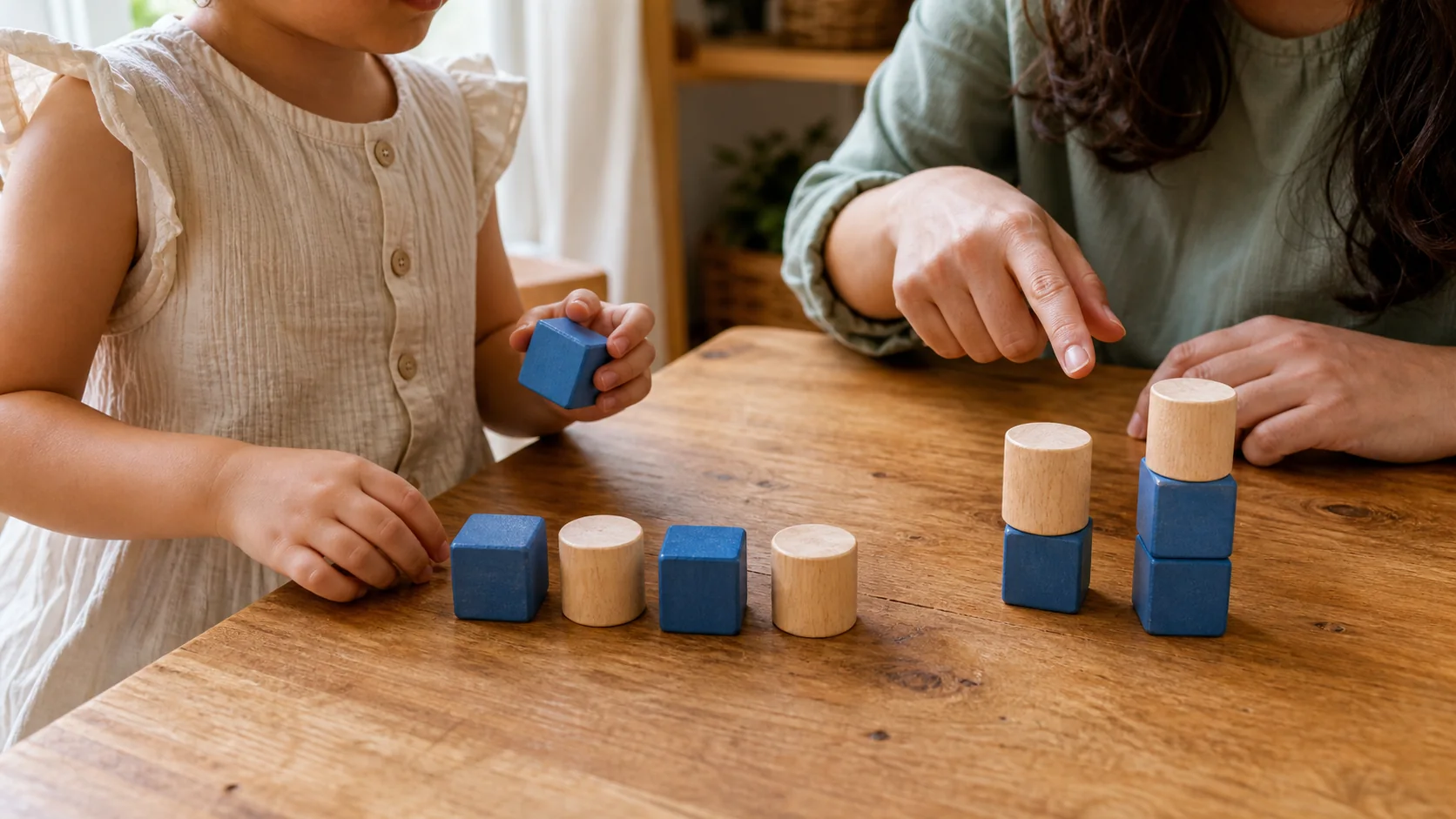
Young children understand math better when they can touch and move objects.
Use items you already have at home, such as:
- Building blocks
- LEGO
- Buttons
- Coins
- Bottle caps
- Small toys
Hands-on learning makes abstract numbers easier to understand.
5. Read Books That Include Math
Not every math lesson needs a worksheet.
Storybooks about counting, shapes, patterns, measuring, or time introduce math in a fun and engaging way.
Reading together also improves vocabulary, which helps children understand math instructions more easily.
6. Ask Questions Instead of Giving Answers
Encourage your child to think.
Ask questions like:
- Which group has more?
- Which one is smaller?
- What happens if we add one more?
- How many are left?
These simple conversations strengthen problem-solving skills and logical thinking.
7. Practice a Little Every Day
Consistency beats long study sessions.
Just 10 to 20 minutes of enjoyable math practice each day is enough for most young learners.
Short lessons keep children interested and prevent burnout.
8. Praise Effort More Than Correct Answers
Confidence grows when children know it’s okay to make mistakes.
Instead of saying:
“You’re so smart!”
Try saying:
- “I like how you kept trying.”
- “Great job figuring that out.”
- “You didn’t give up.”
Children become more willing to solve difficult problems when they know effort matters.
9. Use Worksheets the Right Way
Worksheets are excellent learning tools—but only when they are enjoyable.
Choose colorful worksheets with activities such as:
- Counting
- Number tracing
- Finger math
- Matching numbers
- Shapes
- Simple addition
- Patterns
Avoid making worksheets feel like punishment.
One or two pages each day is often enough.
10. Play Board Games Together
Many classic games secretly teach math.
Examples include:
- Snakes and Ladders
- Dominoes
- Dice games
- UNO
- Number bingo
These games improve counting, number recognition, and strategy while keeping children entertained.
11. Let Your Child Help in the Kitchen
Cooking is one of the best real-life math lessons.
Ask your child to help measure ingredients, count eggs, or compare cup sizes.
Without realizing it, they’ll learn about:
- Counting
- Fractions
- Measurement
- Estimation
Learning becomes meaningful because it’s connected to real life.
12. Avoid Comparing Your Child With Others
Every child learns differently.
Some children understand numbers quickly, while others need more practice.
Comparing your child with siblings or classmates can reduce confidence and motivation.
Instead, celebrate every small improvement.
13. Make Mistakes Part of Learning
Children who fear mistakes often avoid math.
Teach your child that every mistake is an opportunity to learn.
Ask:
“What can we learn from this answer?”
This simple question helps build resilience and confidence.
14. Create a Daily Math Habit
Learning becomes easier when it becomes routine.
Here’s an example:
Monday: Count toys
Tuesday: Finger addition
Wednesday: Shape hunt
Thursday: Number tracing
Friday: Board game
Saturday: Cooking activity
Sunday: Read a counting story
This variety keeps learning exciting.
15. Show That You Enjoy Math Too
Children copy what they see.
If you speak positively about math, your child is more likely to develop the same attitude.
Instead of saying:
“I was never good at math.”
Try saying:
“Let’s solve this together.”
Your encouragement has a bigger impact than you might realize.
Common Mistakes Parents Should Avoid
If you’re wondering how to prepare my child to be good at math, avoid these common mistakes:
- Forcing long study sessions
- Expecting perfection
- Using math as punishment
- Comparing children with others
- Focusing only on memorization
- Becoming frustrated over mistakes
The goal isn’t just to get the right answers—it’s to help your child enjoy learning.
Knowing how to prepare my child to be good at math isn’t about buying expensive learning programs or hiring private tutors.
The best math lessons often happen during everyday moments—counting toys, baking cookies, playing games, reading books, or solving simple problems together.
When learning is fun, children become curious. When they are curious, they become confident. And confident children are much more likely to succeed in math throughout school.
Remember, every small activity today builds the foundation for tomorrow’s success.

Will Gab is the creator of Arianne Learning Printables. He started designing worksheets to support his daughter’s kindergarten learning journey. What began as a personal project has grown into a free educational resource for parents, teachers, and children around the world.
Will Gab continues to develop printable activities based on the skills young children need as they prepare for kindergarten and early elementary school.
Related Worksheets:
 Best Worksheets for Preschool: A Complete Guide for Parents and Teachers
 How to Teach Counting to Preschoolers: Fun and Easy Learning Guide
 Benefits of Tracing Worksheets for Preschool
 Alphabet Letter Tracing Worksheets A–Z
 Kindergarten Readiness Checklist: 25 Skills to Practice Before School
 How to Use Printable Worksheets Without Overwhelming Your Kindergartener