
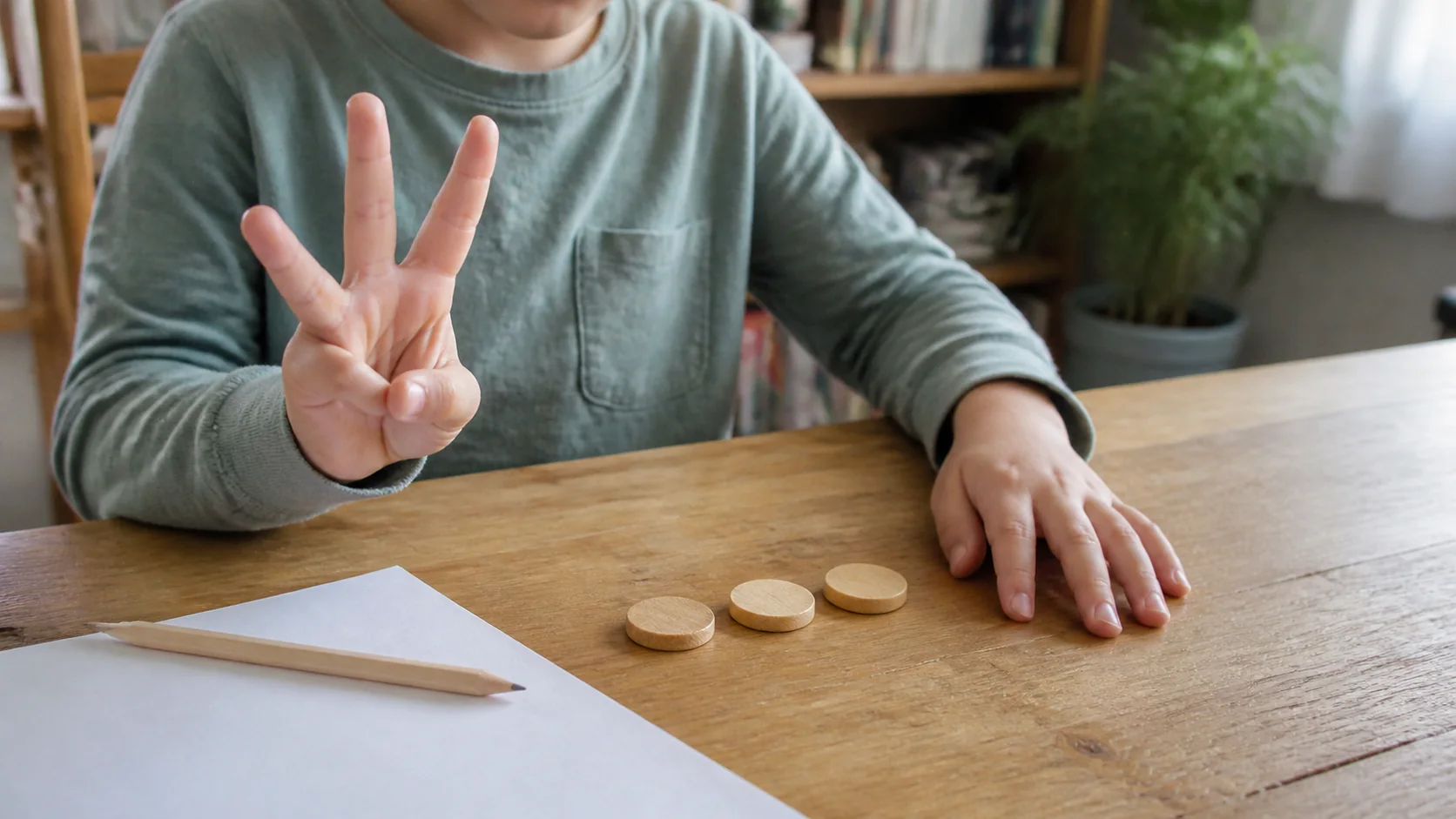
Developing strong math skills starts long before children learn multiplication or division. One of the most effective ways to build early number sense is kindergarten mind computation using fingers. This simple yet powerful method helps children understand numbers, recognize patterns, and eventually solve math problems mentally.
Instead of memorizing answers, children learn to visualize numbers using their fingers. Over time, they no longer need to physically count because they develop an internal picture of number relationships. This process creates a strong foundation for future mathematics.
What Is Kindergarten Mind Computation Using Fingers?
Kindergarten mind computation using fingers is a teaching strategy that uses finger patterns to help children understand numbers and basic arithmetic. Children first count using their fingers, then recognize finger combinations automatically, and finally perform calculations mentally.
The goal is to transition from:
- Counting fingers
- Recognizing finger patterns
- Understanding number bonds
- Visualizing numbers
- Solving problems mentally
This gradual progression builds confidence and mathematical thinking.
Why Teach Mind Computation Using Fingers?
Research and classroom experience show that fingers are valuable learning tools for young children. They provide a concrete representation of numbers before children move to abstract thinking.
Benefits include:
- Improves number recognition
- Builds strong number sense
- Develops mental math skills
- Increases confidence in mathematics
- Supports addition and subtraction
- Strengthens working memory
- Encourages problem-solving
Stage 1: Number Recognition and Finger Counting
The first stage focuses on helping children recognize numbers from 1 to 10 and represent them using their fingers.
Activities include:
- Count the fingers
- Match numbers to finger patterns
- Draw the correct fingers
- Circle the correct number
- Finger counting games
These activities help children understand that numbers represent quantities.
Related resources:
- Finger Counting Worksheets for Kindergarten
- Numbers & Counting Activities
- Counting Worksheets
- Number Matching Worksheets
- Number Tracing Worksheets
- Tracing Numbers 1–5 Worksheets
- Tracing Numbers 6–10 Worksheets
Click here for Stage 1 worksheets.
Stage 2: Number Bonds to 5
Once children recognize numbers, they learn how numbers work together to make 5.
Examples:
- 1 + 4 = 5
- 2 + 3 = 5
- 3 + 2 = 5
- 4 + 1 = 5
Using one hand makes these relationships easy to visualize. Instead of counting every time, children begin to recognize number pairs instantly.
Practice ideas:
- Complete the hand
- Hidden fingers game
- Match the missing number
- Draw the missing fingers
- Number bond puzzles
Click here for Stage 2 worksheets.
Stage 3: Number Bonds to 10
The next step expands learning from one hand to both hands.
Children discover:
- 1 + 9 = 10
- 2 + 8 = 10
- 3 + 7 = 10
- 4 + 6 = 10
- 5 + 5 = 10
Understanding number bonds to 10 makes future addition and subtraction much easier.
Click here for Stage 3 Worksheets.
Stage 4: Finger Addition
Children now learn addition by combining finger groups.
Example:
3 + 2
Instead of starting from 1 each time, they see:
- Three fingers
- Add two fingers
- Total equals five
Eventually, they recognize the answer without counting every finger.
For additional practice, explore:
Stage 5: Counting On Strategy
Instead of counting all objects, children start from the larger number.
Example:
5 + 3
Think:
5…
6, 7, 8
Answer:
8
This strategy greatly improves calculation speed and prepares children for mental computation.
Stage 6: Finger Subtraction
Subtraction becomes easier by putting fingers down.
Example:
7 − 3
Show seven fingers.
Lower three fingers.
Count the remaining fingers.
Answer:
4
Helpful practice includes:
Stage 7: Doubles and Near Doubles
Children recognize patterns such as:
- 2 + 2
- 3 + 3
- 4 + 4
- 5 + 5
Then they apply these facts to:
- 4 + 5
- 5 + 6
- 6 + 7
This improves calculation speed and accuracy.
Stage 8: Make Ten Strategy
One of the most important mental math strategies is making ten.
Example:
8 + 4
Think:
8 needs 2 to become 10.
Take 2 from 4.
Now calculate:
10 + 2 = 12
Children who master this strategy perform addition much more efficiently.
Stage 9: Hidden Fingers
The teacher hides some fingers while showing the rest.
Example:
Only 2 fingers are visible.
How many are hidden if there are 5 fingers altogether?
Answer:
3
This activity develops visualization and flexible thinking.
Stage 10: Mental Computation Without Fingers
The final goal is for children to solve problems mentally.
Examples:
- 4 + 3
- 6 + 2
- 8 − 5
- 10 − 4
Although children learned using fingers, they now imagine finger patterns in their minds instead of physically counting.
Tips for Parents and Teachers
For the best results:
- Practice 10–15 minutes each day.
- Keep lessons fun and interactive.
- Celebrate effort and progress.
- Use games and printable worksheets.
- Review previous skills before introducing new ones.
Consistent practice leads to stronger mental computation skills.
More Free Learning Resources
Continue building your child’s early learning skills with these printable resources:
- Numbers & Counting
- Number Bonds
- Writing & Tracing Worksheets
- Alphabet Worksheets
- Letter Recognition Activities
- Phonics Worksheets
- CVC Word Worksheets
- Sight Word Worksheets
- Coloring Pages
- Dot Marker Pages
- Directed Drawing Activities
Kindergarten mind computation using fingers is more than counting—it is a structured approach to developing number sense and mental math. By progressing from finger counting to number bonds, addition, subtraction, and visualization, children gain confidence and build a strong mathematical foundation that supports future success in school.
Start with simple finger activities today, practice consistently, and watch your child develop the skills needed for fast and accurate mental computation.

Will Gab is the creator of Arianne Learning Printables. He started designing worksheets to support his daughter’s kindergarten learning journey. What began as a personal project has grown into a free educational resource for parents, teachers, and children around the world.
Will Gab continues to develop printable activities based on the skills young children need as they prepare for kindergarten and early elementary school.
Related Worksheets:
 Best Worksheets for Preschool: A Complete Guide for Parents and Teachers
 How to Teach Counting to Preschoolers: Fun and Easy Learning Guide
 Benefits of Tracing Worksheets for Preschool
 How to Prepare My Child to Be Good at Math: 15 Simple Secrets Every Parent Should Know
 Missing Addends Within 10: A Kindergarten Guide and Free Worksheet
 Addition Word Problems Within 10: Kindergarten Activities and Free Worksheet
Pingback: Counting On Worksheets for Kindergarten (Addition Within 10 Using Fingers) - Arianne Learning Printables Counting On Worksheets for Kindergarten (Addition Within 10 Using Fingers)
Pingback: How to Prepare My Child to Be Good at Math: 15 Simple Secrets Every Parent Should Know - Arianne Learning Printables How to Prepare My Child to Be Good at Math: 15 Simple Secrets Every Parent Should Know
Pingback: Finger Subtraction Worksheets Within 10 for Kindergarten - Arianne Learning Printables Finger Subtraction Worksheets Within 10 for Kindergarten (Free Printable Activities)