
Hidden fingers is a simple game with an important purpose: it helps children picture a missing quantity instead of counting every finger they can see. In Stage 9 of our finger-math sequence, a child looks at the visible fingers, remembers the whole amount, and works out how many fingers must be hidden.
This lesson follows the Make Ten Strategy and belongs to our complete Kindergarten Mind Computation Using Fingers guide.
What Is the Hidden Fingers Strategy?
Begin with one hand. Tell the child that one hand always has five fingers. Show some fingers and hide the rest behind a cloth, card, or your other hand.
For example, if two fingers are visible, ask: “Two are showing. How many are hiding to make five?” The child may first count on, use a remembered number bond, or picture the missing fingers. The answer is three.
Once combinations to five feel easy, repeat the game with both hands and a whole of ten.
Why Hidden Fingers Builds Mental Math
The activity develops part-whole understanding. Children learn that a whole number can be split into different pairs, such as 2 and 3 making 5 or 6 and 4 making 10. It also strengthens number bonds, visual memory, flexible thinking, and readiness for missing-addend problems.
How to Teach Stage 9
1. Start with a whole of five
Show all five fingers. Let the child count them, then hide one or more fingers. Keep the language consistent: “Five altogether, two showing, how many hidden?”
2. Let the child explain
Accept answers supported by reasoning. A child might say, “I know two and three make five,” or count 3, 4, 5 from the visible amount.
3. Move to ten slowly
Use both hands only after number bonds to five are secure. Briefly reveal all ten fingers before hiding a group so the whole remains clear.
4. Fade the hands
Say a problem without showing fingers: “There are ten altogether. Six are visible. How many are hidden?” Encourage the child to imagine the two hand patterns.
Free Stage 9 Hidden Fingers Worksheet
The six-page A4 printable moves from hidden fingers within five to missing parts of ten, number bonds, multiple-choice review, and short story problems.
Download the free Stage 9 Hidden Fingers worksheets
Print at 100% on A4 paper. Use only one or two pages at a time and keep a real hand or counters nearby if the child needs support.
Helpful Teaching Tips
- Practice for five to ten minutes.
- Ask “How do you know?” after an answer.
- Mix easy and challenging combinations.
- Return to real fingers whenever a child becomes frustrated.
- Celebrate a correct strategy, not only a quick answer.
For more practice with missing parts, try our Number Bonds to 10 worksheets.
Frequently Asked Questions
What age is this lesson for?
It suits many kindergarten children ages five to six who can recognize quantities to ten and understand basic number bonds.
Must children answer without counting?
No. Counting is a valid bridge. With repeated practice, children begin to recall or visualize the hidden amount automatically.
What comes after hidden fingers?
Stage 10 removes the physical finger prompt. Children solve familiar addition and subtraction facts by picturing number patterns in their minds.
From Seeing to Imagining
Hidden fingers connects concrete counting with mental computation. Keep the game playful, repeat familiar combinations, and give children time to describe what they picture.
Download the free Stage 9 Hidden Fingers worksheets

Related Worksheets:
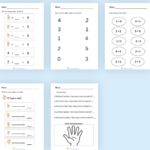 Number Bonds to 5 Worksheets for Kindergarten (Free Printable Finger Math Activities)
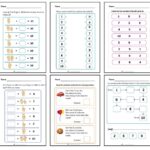 Number Bonds to 10 Worksheets for Kindergarten (Free Printable Finger Math Activities)
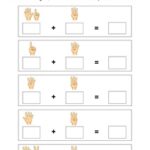 Finger Addition Worksheets Within 5 and 10 for Kindergarten
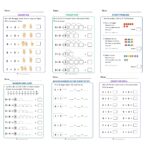 Counting On Worksheets for Kindergarten (Addition Within 10 Using Fingers)
 Make Ten Strategy for Kindergarten: A Simple Finger Math Guide
 Number Bonds to 10 for Kindergarten: Easy Activities and Free Worksheet
Pingback: Mental Computation Without Fingers for Kindergarten: Stage 10 - Arianne Learning Printables