
Starting kindergarten is a big step for both children and parents. It is normal to wonder whether your child knows enough, can follow a classroom routine, or is ready to learn with a group.
The good news is that kindergarten readiness is not about reading every word, writing perfect sentences, or finishing long worksheets. It is a combination of early academic skills, communication, self-care, motor development, and a willingness to try.
Use this kindergarten readiness checklist as a friendly guide—not a test. Children develop at different rates, and schools may have different expectations. If you have concerns about your child’s development, talk with the child’s teacher, pediatrician, or another qualified professional.
How to Use This Kindergarten Readiness Checklist
Read each skill and notice what your child can do independently, what they can do with a little help, and what they have not practiced yet.
You can use three simple marks:
- Yes: My child usually does this independently.
- Learning: My child can do this with help or is still practicing.
- Not yet: We have not worked on this skill yet.
“Not yet” is not a failure. It simply shows you what to practice next. Choose one or two skills at a time and work on them through short games, stories, conversations, and hands-on activities.
Language and Communication Skills
1. Says their first and last name
Practice this during pretend school, while introducing family members, or before leaving the house. Children should also begin recognizing their first name in print.
2. Speaks clearly enough to be understood
A kindergartener does not need perfect pronunciation, but they should usually be able to express basic needs, answer simple questions, and share an idea.
3. Listens to a short story
Read together for 10 to 15 minutes. Pause occasionally to ask, “What happened?” or “What do you think will happen next?”
4. Follows two-step directions
Try directions such as, “Put the crayons in the box, then bring me the book.” Begin with familiar tasks before adding new ones.
5. Takes turns in a conversation
Practice listening without interrupting, answering a question, and asking a related question. Mealtime conversations are perfect for this skill.
Early Reading and Alphabet Skills
6. Recognizes some uppercase and lowercase letters
Start with the letters in your child’s name, then add a few letters at a time. Our alphabet worksheets can provide extra practice without making the activity feel overwhelming.
7. Knows that letters make sounds
Children do not need to master every sound before kindergarten. They should begin to understand that letters represent sounds, such as B in ball or M in moon.
8. Identifies some beginning sounds
Play a sound hunt: “Can you find something that starts with /s/?” Let your child point to a sock, spoon, or soap.
9. Recognizes rhyming words
Say two words and ask whether they rhyme: cat–hat, sun–run, or dog–log. Silly made-up rhymes are useful too.
10. Handles a book correctly
Check whether your child can hold a book upright, turn pages one at a time, and follow print from left to right. These are important early reading habits.
For more sound and word activities, browse the site’s phonics and reading printables.
Early Writing and Fine-Motor Skills
11. Holds a crayon or pencil with control
The grip does not need to be perfect. Look for growing control and comfort. Short crayons, chalk, play dough, tongs, and clothespins can strengthen the small hand muscles used for writing.
12. Draws lines and simple shapes
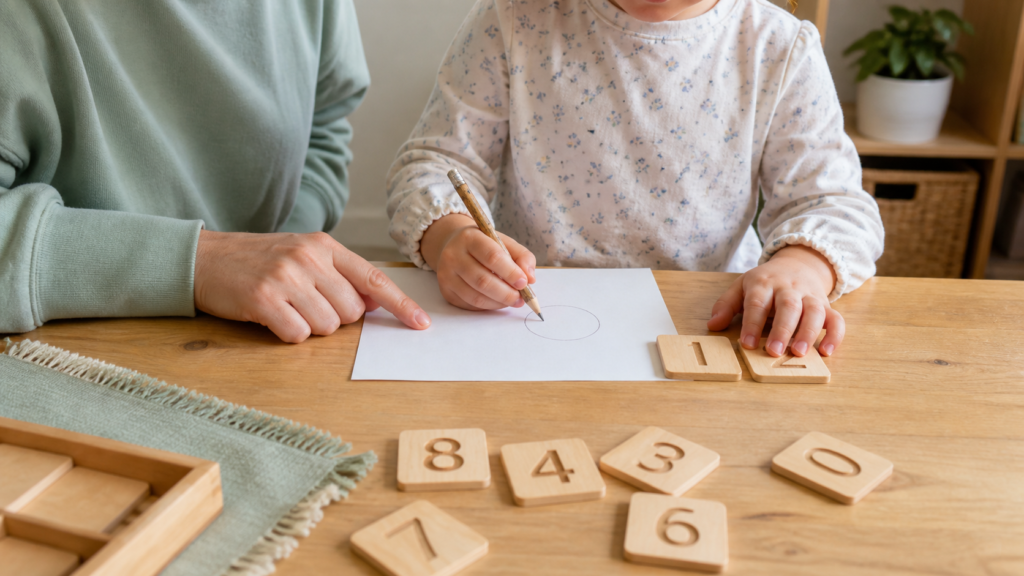
Practice vertical lines, horizontal lines, circles, crosses, and simple curves. These strokes are the building blocks of many letters and numbers.
13. Writes or traces their first name
Begin with a model that your child can copy. Keep the letters large and praise careful effort. You can create practice pages with the free personalized name tracing worksheet generator.
14. Uses scissors with supervision
Invite your child to cut along thick straight lines before trying curves and shapes. Always use child-safe scissors and supervise closely.
15. Colors within a general area
Perfectly staying inside the lines is not required. Coloring builds hand strength, visual attention, and pencil control. Try the site’s coloring and creativity pages for relaxed practice.
More prewriting activities are available in writing and tracing.
Early Math Skills
16. Counts aloud in order
Many children entering kindergarten can count to 10, while others can count higher. Focus on saying the numbers in the correct order instead of rushing toward a large number.
17. Counts objects one by one
Ask your child to touch or move each object while counting. Try buttons, blocks, toy animals, or snacks. This helps connect spoken numbers to real quantities.
18. Recognizes some written numbers
Begin with numbers 0 through 5, then move toward 10. Point out numbers on calendars, clocks, doors, and price tags.
19. Compares small groups
Make two groups of objects and ask which has more, which has fewer, or whether they are equal. Keep the groups small enough to count easily.
20. Names basic shapes and patterns
Look for circles, squares, triangles, and rectangles around the home. Make a simple repeating pattern such as red-blue-red-blue and ask what comes next.
Use the numbers and math worksheets when your child is ready for extra pencil-and-paper practice.
Social, Emotional, and Independence Skills
21. Separates from a caregiver for a short time
Some nervousness is completely normal. Short, predictable separations with a trusted adult can help your child learn that you will return.
22. Takes turns and shares materials
Board games, building activities, and family art projects are easy ways to practice waiting, sharing, and handling small disappointments.
23. Uses words to ask for help
Teach useful phrases such as “Can you help me?” “I don’t understand,” and “May I use that when you are finished?”
24. Manages basic self-care tasks
Practice opening a lunch container, washing and drying hands, using the toilet, putting on a jacket, and packing a bag. Choose clothing and containers that your child can manage.
25. Cleans up after an activity
Use one clear direction and a consistent place for each item. A short cleanup song can make the routine easier and more enjoyable.
A Simple Weekly Kindergarten-Preparation Routine
You do not need hours of formal lessons. Try this balanced 15- to 20-minute routine four days a week:
- Read for five minutes. Talk about the pictures, characters, or new words.
- Practice one small skill for five minutes. Trace a name, count objects, match letters, or identify sounds.
- Add a hands-on activity. Cut paper, build with blocks, sort household items, or draw a picture.
- End with conversation. Ask your child what felt easy, what felt difficult, and what they would like to do again.
Stop before your child becomes tired or frustrated. Short, positive practice is more useful than a long session filled with pressure.
What If My Child Cannot Do Everything Yet?
That is expected. A readiness checklist is a snapshot, not a final judgment about your child’s ability.
Notice patterns. If your child needs practice in one or two areas, add those skills to everyday play. If you see ongoing difficulty with communication, movement, hearing, vision, behavior, or several developmental areas, ask a pediatrician or your local school for guidance. Early support can make the transition to school easier.
Frequently Asked Questions
Does my child need to read before kindergarten?
Usually, no. It is more important that a child enjoys books, listens to stories, recognizes some letters, and understands that print carries meaning. Kindergarten teachers help children develop formal reading skills.
Should a child be able to write their full name?
Writing or tracing a first name is a useful goal. Letter formation may still be uneven, and that is normal. Begin with recognition, tracing, and copying before expecting independent writing.
How high should a child count before kindergarten?
Expectations vary. Counting in order is helpful, but understanding quantity matters more than memorizing a long sequence. A child who can accurately count a small set of objects is developing an important math foundation.
How often should we use worksheets?
Use worksheets as one part of a varied routine. Combine them with reading aloud, conversation, outdoor play, art, building, sorting, and real-life counting. For young children, brief and focused practice works best.
What is the most important kindergarten-readiness skill?
There is no single skill that guarantees success. Curiosity, communication, growing independence, and the ability to participate in routines all matter alongside early literacy and math.
Final Reminder for Parents
Preparing for kindergarten should build confidence, not anxiety. Celebrate what your child can already do, choose a few “not yet” skills to practice, and keep learning playful.
Explore more free printable learning worksheets whenever you need a simple activity for alphabet practice, handwriting, phonics, counting, or creativity.

Will Gab is the creator of Arianne Learning Printables. He started designing worksheets to support his daughter’s kindergarten learning journey. What began as a personal project has grown into a free educational resource for parents, teachers, and children around the world.
Will Gab continues to develop printable activities based on the skills young children need as they prepare for kindergarten and early elementary school.
Related Worksheets:
 Best Worksheets for Preschool: A Complete Guide for Parents and Teachers
 How to Teach Counting to Preschoolers: Fun and Easy Learning Guide
 Benefits of Tracing Worksheets for Preschool
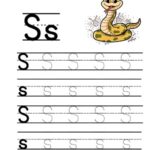 Alphabet Letter Tracing Worksheets A–Z
 Kindergarten Mind Computation Using Fingers: A Complete Step-by-Step Guide
 How to Prepare My Child to Be Good at Math: 15 Simple Secrets Every Parent Should Know