
Kumon is one of the most recognizable after-school learning programs in the world. Some parents consider it when a child needs stronger basic skills. Others are looking for enrichment, better study habits, or a structured routine outside school. Its familiar worksheets may look simple, but the method behind them is more specific than “doing extra homework.”
So, what is Kumon, why has it attracted so many families, and what should parents understand before enrolling a child? This independent overview explains the method, its possible strengths, its challenges, and the questions worth asking.
Disclosure: Arianne Learning Printables is not affiliated with or endorsed by Kumon. “Kumon” is a trademark of its respective owner. This article is an educational overview, not a substitute for discussing your child’s needs with a teacher or qualified learning professional.
What is the Kumon learning method?
Kumon is an individualized, worksheet-based learning program for mathematics and reading. According to the official explanation of the Kumon Method, children begin at a comfortable level based on their current ability rather than automatically starting at their school grade. They then progress through carefully sequenced material in small steps.
The method was developed in Japan by mathematics teacher Toru Kumon. He originally created short calculation worksheets for his son, Takeshi. The idea was to build enough skill and independence for the child to move forward without needing every solution explained by an adult.
Today, the program is built around four connected ideas: individualized placement, self-learning, small-step worksheets, and guidance from an instructor.
How does Kumon work day to day?
A child first completes an assessment so an instructor can choose an appropriate starting point. That point may feel easy. This is intentional: early work allows the child to become familiar with the routine, experience success, and demonstrate accuracy before the difficulty increases.
Students complete a short assignment regularly, often every day. The exact routine depends on the child and the local center. Kumon’s U.S. description says assignments commonly take about 30 minutes per subject, with work divided between center days and home days. Parents should ask their local center about its current schedule, format, and expectations because arrangements can vary.
Completed work is checked for accuracy and time. If a skill is not yet secure, the instructor may assign similar pages again. When the child shows sufficient fluency and understanding, the next small step is introduced.
Why are so many parents interested in Kumon?
1. The routine is clear and predictable
Families often struggle to decide what a child should practice next. Kumon provides a sequence, a starting point, and regular assignments. A predictable routine can reduce negotiation because the child knows what is expected.
2. Skills are broken into small steps
The program’s worksheets are designed to move gradually from easier material to harder material. The official description of Kumon’s small-step worksheets explains that examples and introductory exercises are used to help students approach new work independently. Small changes can make unfamiliar material feel less overwhelming.
3. It aims to build fluency
Repeated practice can help basic facts, calculations, handwriting patterns, and reading skills become more automatic. When foundational work requires less effort, a child may have more attention available for complex problems and comprehension.
4. Progress is based on the child’s level
Two children of the same age may have different starting points. One may need to rebuild an earlier skill, while another may be ready for work above grade level. Kumon’s ability-based progression attracts parents who want a plan that is not limited to the class calendar.
5. Independence is a central goal
Kumon describes self-learning as children studying examples, noticing patterns, and attempting problems before receiving a full explanation. Instructors provide guidance, but the program is designed to avoid making the adult the source of every answer. For some children, this can develop persistence and confidence.
What parents sometimes misunderstand
Kumon is not simply private tutoring
A traditional tutor may reteach a school lesson, discuss several strategies, or help with current homework. Kumon follows its own sequence and emphasizes independent worksheet study. A child who needs detailed, conversational teaching may require support beyond the program.
More pages do not automatically mean more learning
Practice is helpful when it is accurately targeted and emotionally manageable. If a child rushes, guesses, copies patterns without understanding, or becomes distressed every day, completing more worksheets is not the right measure of progress.
An easy starting point is not necessarily wasted time
Parents may be surprised when the first pages appear below a child’s school level. The goal is often to establish accuracy, speed, concentration, and confidence. Still, parents should ask how the starting point was selected and how the instructor will decide when to advance.
Possible benefits of the Kumon method
- Consistent practice: brief, regular sessions can be easier to sustain than occasional long sessions.
- Visible progress: levels and completed pages give children a concrete record of improvement.
- Stronger foundational skills: focused repetition may improve accuracy and fluency.
- Study habits: children practice beginning work, concentrating, correcting errors, and finishing a task.
- Individual pacing: a child can spend longer on a difficult step or progress beyond grade level when ready.
Possible challenges to consider
- Repetition can feel tiring: some children find repeated pages reassuring, while others lose motivation.
- Daily consistency requires family support: parents usually need to protect study time and encourage completion without turning it into a daily conflict.
- Fluency is not the whole of mathematics or reading: children also need conversation, play, rich books, real-world problem-solving, and creative application.
- The fit depends on the instructor and plan: thoughtful observation and appropriate adjustments matter.
- Cost and travel matter: families should consider fees, transportation, time, and whether the routine is sustainable.
Is Kumon suitable for kindergarten?
Young children can benefit from short routines, number recognition, counting, pencil control, letter knowledge, and early reading activities. However, kindergarten learning should remain active, social, and playful. Worksheets should not replace counting real objects, listening to stories, drawing, moving, talking, and exploring.
A five-minute focused activity may be more useful than a longer session filled with frustration. Parents can support early math with our guide on how to teach counting to preschoolers and use hands-on strategies from our kindergarten mind computation using fingers series.
If worksheets are part of your home routine, read how to use worksheets without overwhelming your kindergartener. The child’s attention span and emotional response should guide the length of practice.
Questions to ask before enrolling
- What did the placement assessment show?
- Why is this the recommended starting point?
- How much daily work is expected for my child?
- How will accuracy, time, confidence, and understanding be monitored?
- When is repetition useful, and when will the plan be adjusted?
- How should I respond when my child is stuck or frustrated?
- What does progress look like after one month, three months, and six months?
- How will the program complement what my child learns at school?
A simple mastery check for parents
Finishing a page quickly is only one sign of progress. Ask the child to complete a similar problem with different numbers, explain what changed, or show the idea with objects. A skill is stronger when the child can use it outside the exact page on which it was practiced.
Watch for three signs: the child is accurate, can explain or demonstrate the idea at an age-appropriate level, and can apply it in a slightly different example. If only speed improves, more meaningful practice may be needed.
Kumon and Singapore Math are not the same
Parents sometimes compare Kumon with Singapore Math, but their emphasis is different. Kumon is a structured program known for individualized worksheet progression, regular practice, fluency, and self-learning. Singapore Math is commonly associated with deep concept development through concrete materials, pictures, number bonds, and bar models.
The approaches can overlap, but they are not interchangeable. Parents should compare the goals, daily workload, amount of direct teaching, and the kind of practice their child responds to best.
So, is Kumon worth it?
Kumon may suit a child who responds well to routine, manageable steps, independent practice, and visible progress. It may be less suitable when a child needs highly interactive teaching, frequent variety, or intensive support for a specific learning difficulty.
The most useful question is not whether Kumon is “good” in general. Ask whether the program, instructor, workload, and family routine are a healthy match for this particular child. A strong learning plan should build skill without sacrificing curiosity, confidence, rest, and the joy of learning.

Will Gab is the creator of Arianne Learning Printables. He started designing worksheets to support his daughter’s kindergarten learning journey. What began as a personal project has grown into a free educational resource for parents, teachers, and children around the world.
Will Gab continues to develop printable activities based on the skills young children need as they prepare for kindergarten and early elementary school.
Related Worksheets:
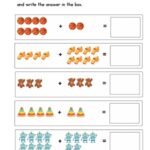 Beginning Addition Worksheets – Count and Add Pictures | Preschool & Early Elementary Math
 Number Bonds to 10 Worksheets for Kindergarten (Free Printable Finger Math Activities)
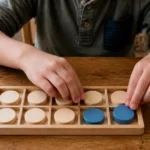 Make Ten Strategy for Kindergarten: A Simple Finger Math Guide
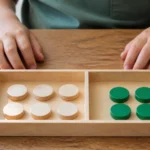 Number Bonds to 10 for Kindergarten: Easy Activities and Free Worksheet
 How to Help a Kindergartener Memorize a Poem
 Sorting Objects by Color, Shape and Size (Free Preschool Worksheet)