
Free phonics worksheets help children understand how spoken sounds connect to printed letters. This collection supports preschool, kindergarten, and early elementary learners as they move from hearing sounds to blending words and reading short sentences.
Phonics is most effective when lessons follow a clear sequence. Children first notice sounds in spoken words, then connect those sounds to letters, blend them into words, and finally apply the skill while reading meaningful text.
Phonics Learning Sequence
- Letter recognition: identify uppercase and lowercase letters.
- Beginning sounds: hear and match the first sound in a word.
- Ending sounds: listen for the final sound.
- Sound blending: join separate sounds to read a word.
- Word families and CVC words: compare predictable spelling patterns.
- Fluent reading: use phonics knowledge in short sentences.
Choose a Phonics Skill
- Start with letter recognition worksheets when a child still confuses letter shapes or names.
- Practice beginning sounds and the ending sounds activity to strengthen sound awareness.
- Use rhyming-word practice to help children notice matching word endings.
- Build listening skills with the counting syllables worksheet.
- Move into blending with the CVC word worksheet collection.
- Practice common words using the sight word worksheets.
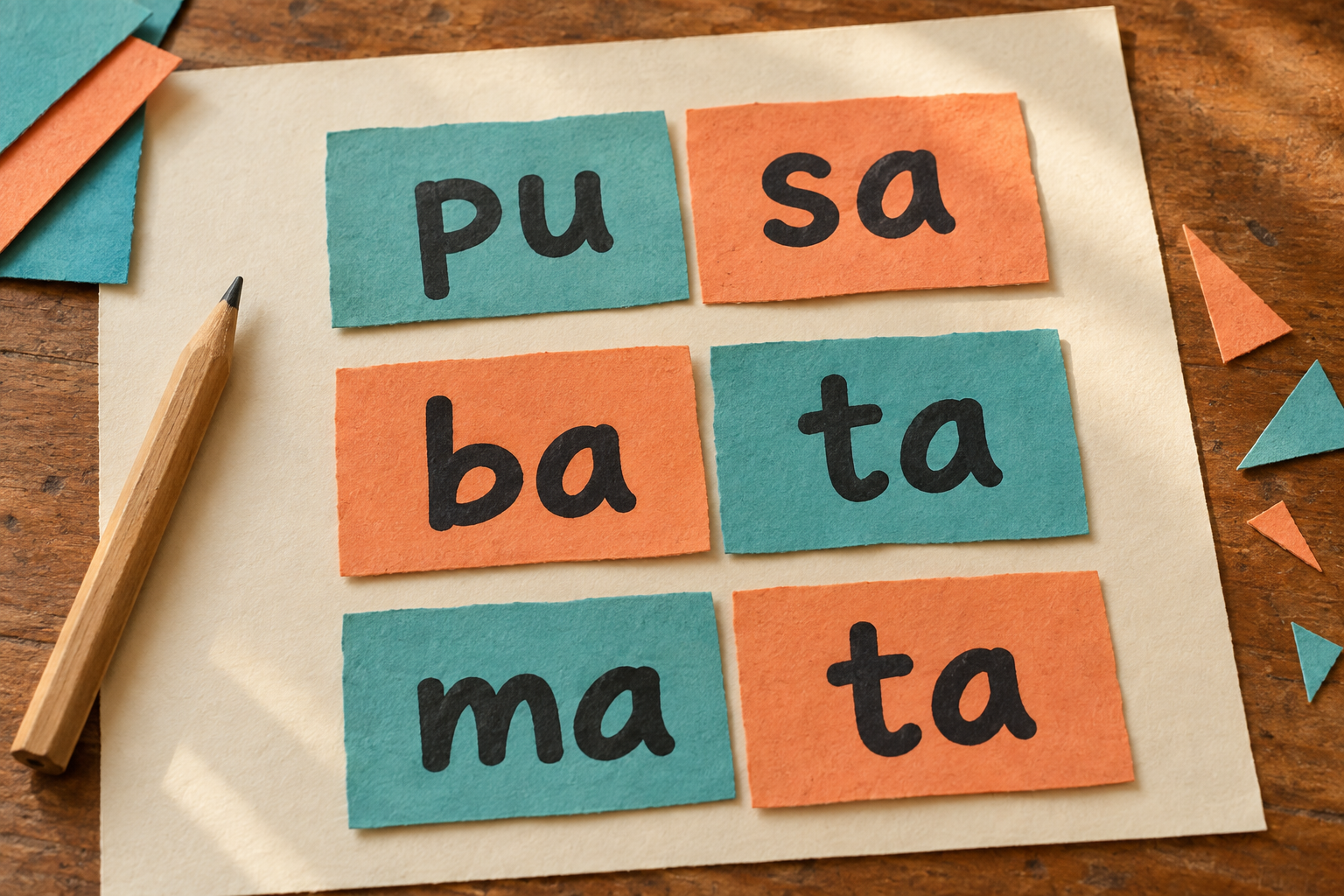
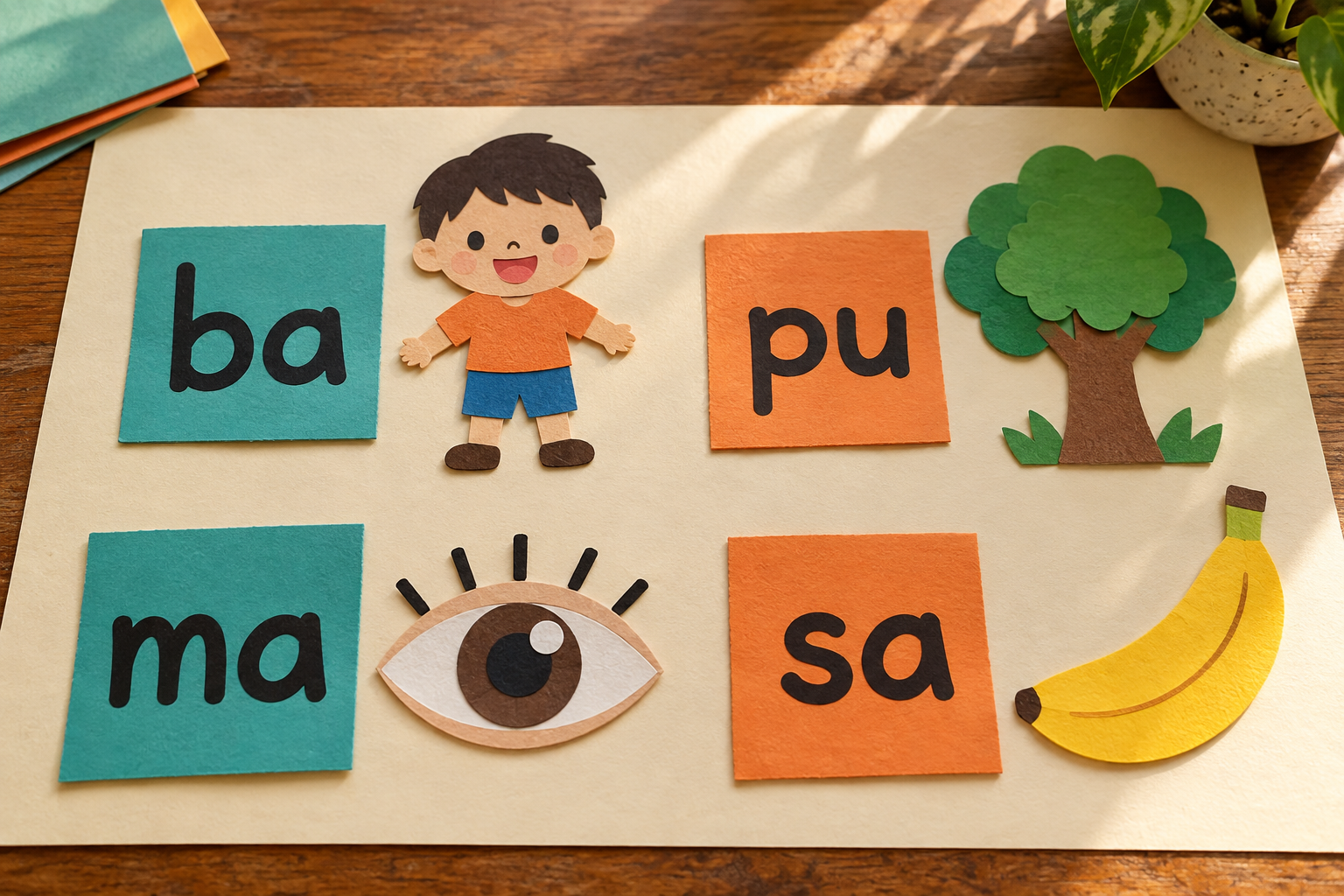
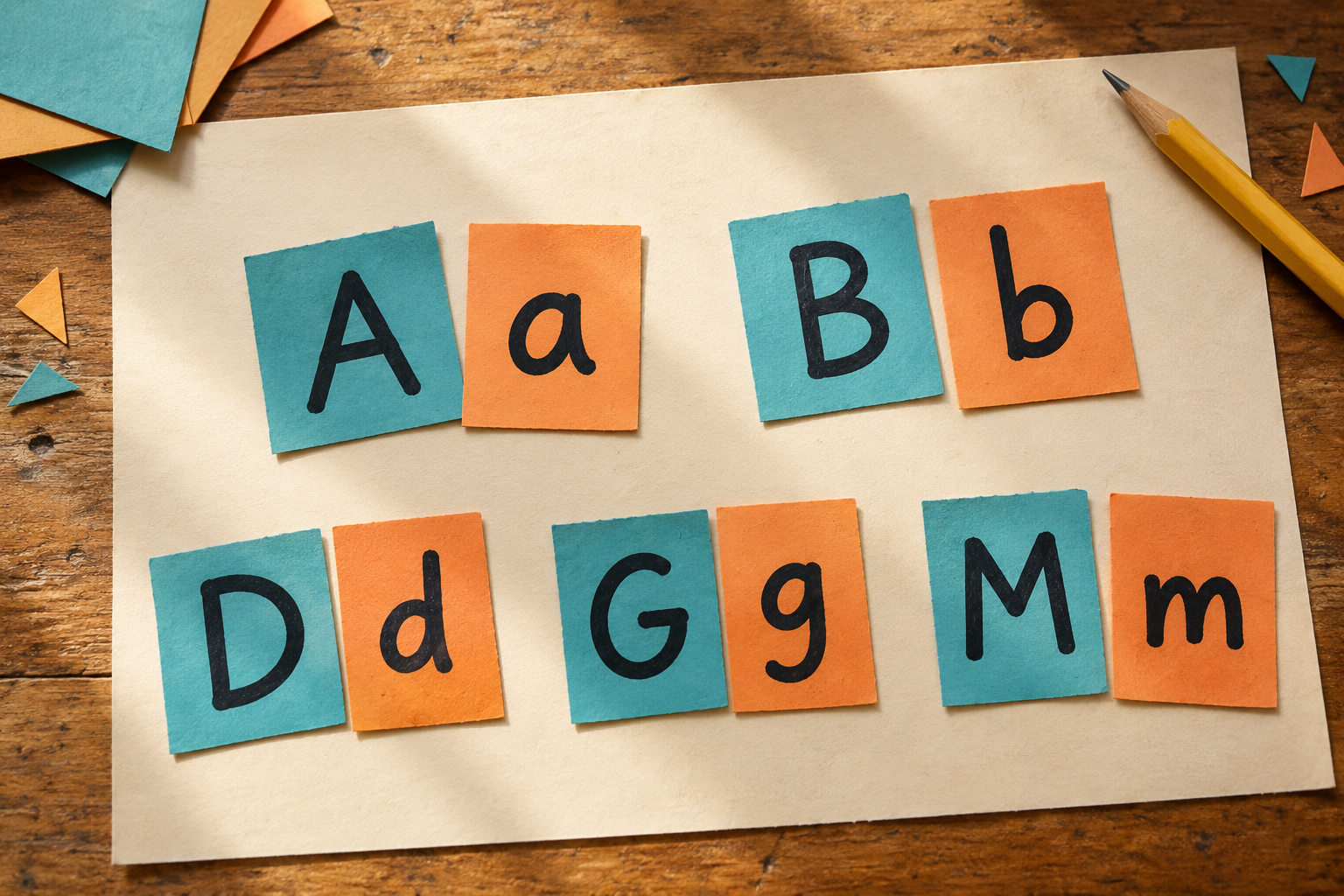
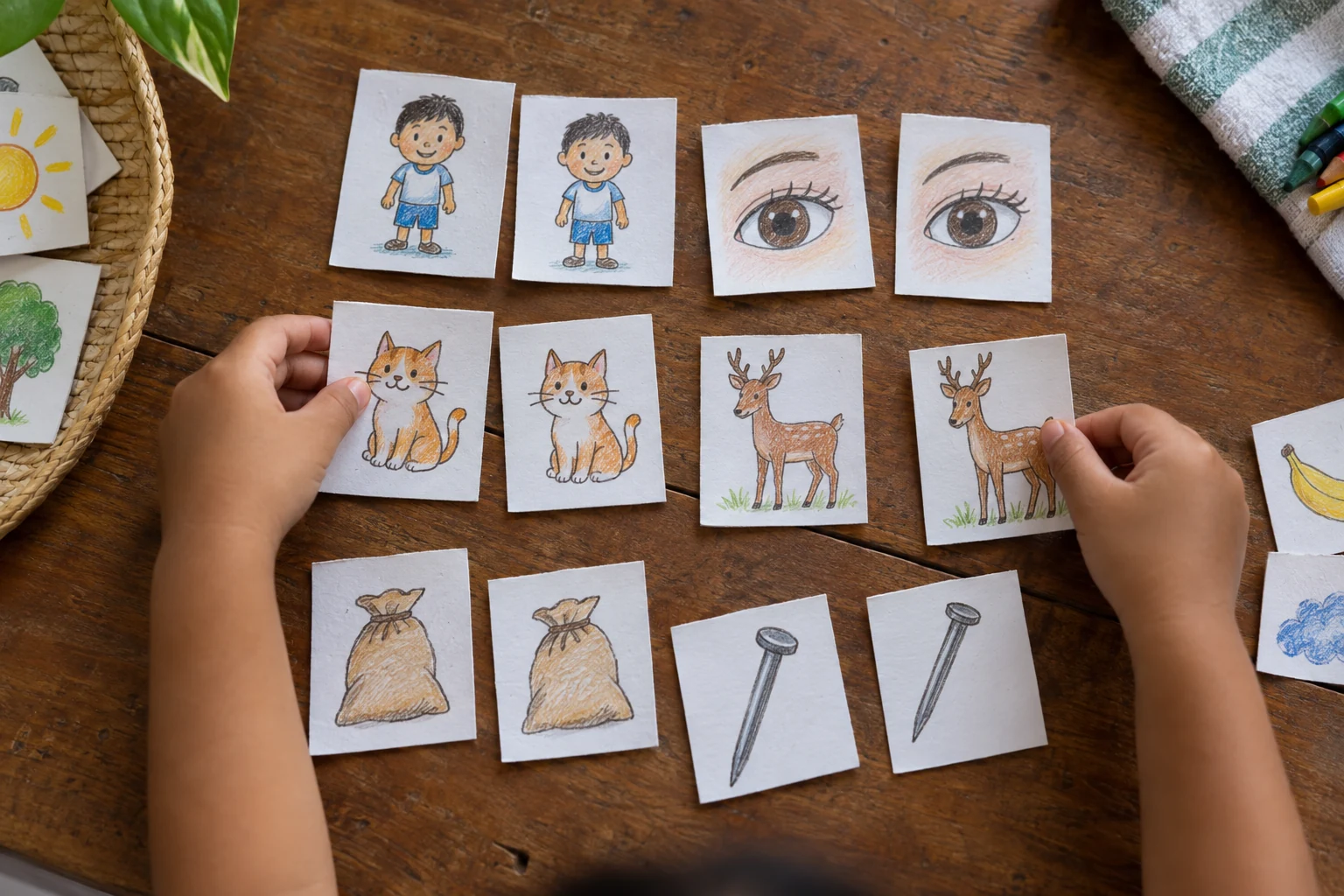
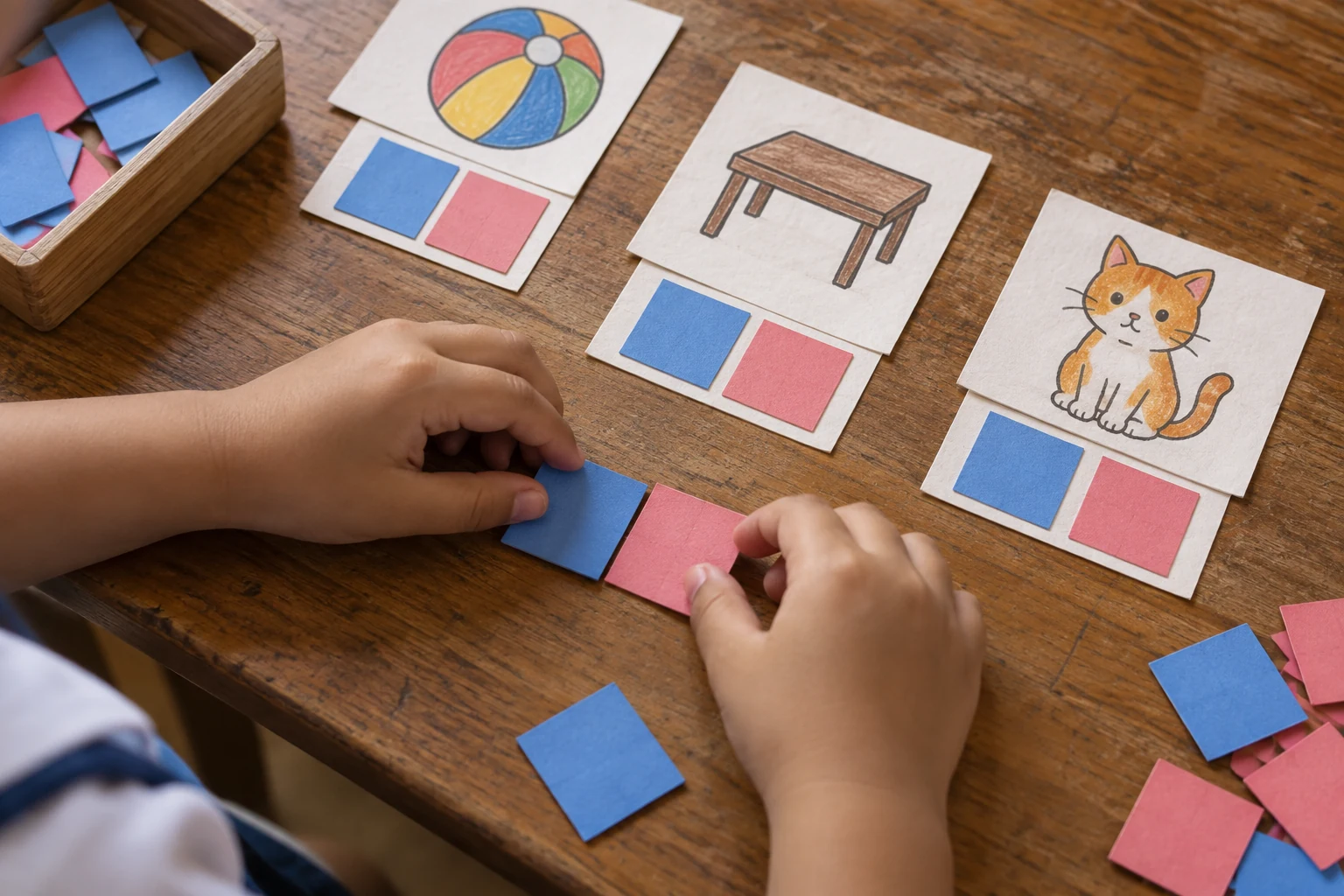


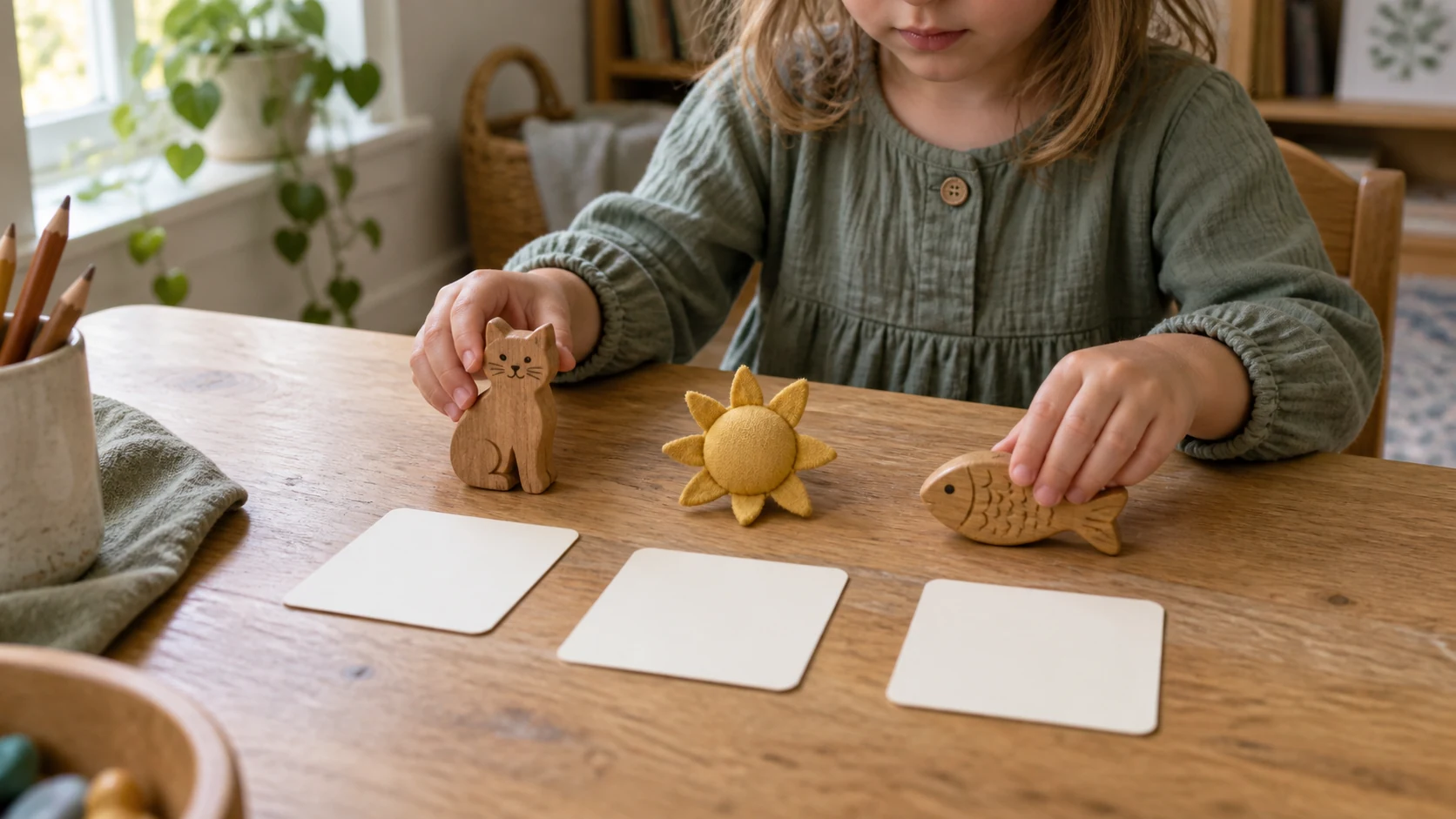
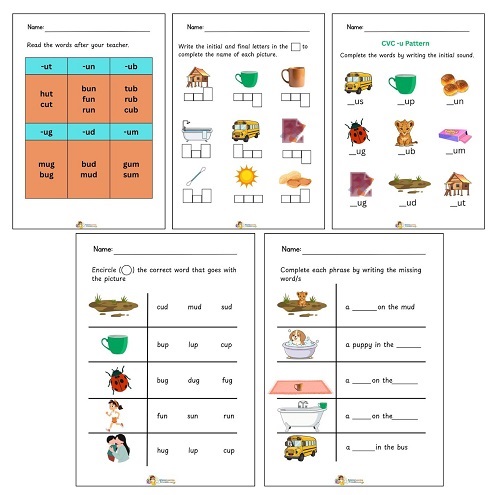
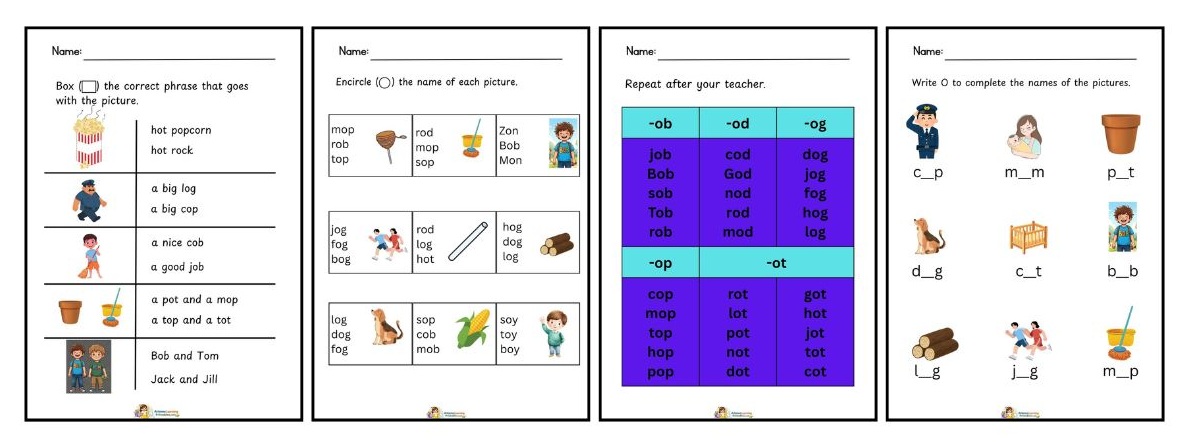
A Five-Step Phonics Teaching Routine
- Listen first. Say the target sound clearly and ask the child to repeat it.
- Connect sound and letter. Show the letter while saying its sound rather than only its name.
- Compare examples. Use two words that contain the sound and one word that does not.
- Read and write. Complete a short worksheet activity while saying each sound aloud.
- Apply the skill. Find the sound or pattern in a book, label, or simple sentence.
Teaching Observations
A child may know letter names without knowing the sounds needed for reading. During practice, notice whether the learner produces the sound promptly or first recites the alphabet. Give extra review when the connection between a letter and its sound is still slow.
Also watch for guessing from pictures. Pictures support meaning, but the child should still look at every letter. Ask, “What sound do you see first?” and “Does your answer match the last sound?” These questions encourage careful decoding without simply giving the word.
Common Phonics Mistakes
- Teaching too many sounds at once: introduce one or two targets and mix them with familiar sounds.
- Adding “uh” to consonants: say /m/ rather than “muh” so sounds blend smoothly.
- Using worksheets without oral practice: say, hear, and blend sounds before writing.
- Correcting too quickly: allow a few seconds for the child to look through the whole word.
- Moving on after one correct answer: revisit the skill in a new word and on another day.
Phonics Mastery Checklist
A phonics skill is becoming secure when the child can:
- Hear the target sound in several spoken words.
- Match the sound to its letter or spelling pattern.
- Read an unfamiliar example without relying on a picture.
- Write or build a word containing the sound.
- Use the skill accurately on two different days.
How Often Should Children Practice?
Five to ten minutes of focused practice, four or five days each week, is usually enough. Keep activities short, repeat successful examples, and end before the child becomes tired. When accuracy is steady, mix the new pattern with previously learned sounds.
Build a Complete Literacy Routine
Phonics should be combined with conversation, read-aloud time, handwriting, and comprehension. Explore the full Phonics and Reading hub, reinforce letter formation with the Alphabet Worksheets hub, and support pencil control through the Writing and Tracing collection.