
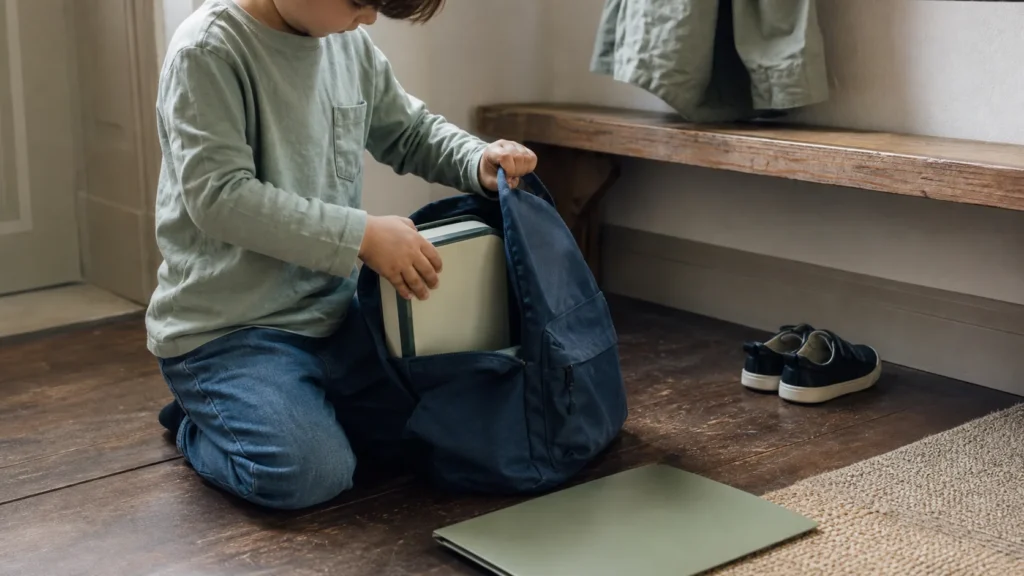
School mornings can feel surprisingly busy. A missing shoe, an unfinished breakfast, or a child who does not want to stop playing can quickly turn a normal morning into a stressful one.
A simple kindergarten morning routine gives children a predictable order to follow. They know what comes next, parents repeat fewer instructions, and the family has more time to leave without rushing.
The goal is not a perfectly quiet morning. It is a routine your family can repeat on most school days, even when someone wakes up tired or plans change.
Why a Morning Routine Helps Kindergarten Children
Young children are still learning to estimate time, remember several instructions, and move from one activity to another. A routine turns a long direction—“Get ready for school”—into a series of small, familiar actions.
A consistent routine can help children:
- understand what is expected;
- practice dressing and personal care;
- take responsibility for simple belongings;
- make fewer decisions when they are tired;
- feel more secure before leaving home; and
- arrive at school ready to participate.
These independence skills are an important part of our kindergarten readiness checklist.
Prepare the Night Before
The easiest morning often begins the evening before. Five or ten minutes of preparation can remove several common delays.
Before bedtime:
- Check the school bag for papers, books, and supplies.
- Place shoes, socks, and an outfit in one location.
- Prepare the lunch or gather the containers you will use.
- Fill a water bottle and store it as appropriate.
- Put keys, identification, and other adult essentials near the door.
- Check the next day’s school notices, weather, and transportation plan.
Let your child help with one or two tasks. The purpose is to build a habit, not to make the child responsible for remembering everything.
A 10-Step Kindergarten Morning Routine
Adjust the order to fit your home, school schedule, and child’s needs.
1. Wake up at a consistent time
Use a gentle alarm, natural light, or the same short phrase each morning. A consistent wake-up time gives your child a clearer body rhythm than a different schedule every day.
Allow a little extra time during the first weeks of school. New routines usually take longer before they become familiar.
2. Use the toilet and wash hands
Putting bathroom time near the beginning prevents an urgent last-minute stop. Keep soap, a towel, and a safe step stool within easy reach when appropriate.
3. Get dressed
Offer two suitable outfits the night before if choosing clothes causes delays. Clothing with manageable fasteners helps a child practice independence.
If getting dressed is difficult, teach one part at a time: underwear and bottoms first, then shirt, socks, and shoes.
4. Eat a simple breakfast
Choose familiar foods your child can finish in the available time. A complicated breakfast is not necessary on a school morning.
Keep a small list of dependable options so the family is not making a new decision every day. Follow any dietary guidance provided by your child’s healthcare professional.
5. Clear the breakfast place
A kindergartener can carry a safe cup or plate to the designated area, throw away a napkin, or wipe a small spill. One tiny cleanup job teaches that routines include finishing an activity.
6. Brush teeth and tidy up
Use a short reminder such as “top, bottom, front, back” while supervising as needed. Brushing teeth can also become the signal that breakfast time has ended.
7. Check the school bag
Ask your child to look for two or three familiar items, such as a folder, lunch, and water bottle. An adult should still check important papers and anything the school specifically requires.
8. Put on shoes and outerwear
Create a small “launch area” near the door for shoes, a jacket, and the school bag. A basket, low hook, or marked space is enough.
9. Complete a one-minute readiness check
Use the same questions each day:
- Are you dressed?
- Did you brush your teeth?
- Do you have your bag, lunch, and water?
- Do you need to use the toilet?
Keep the check short. This is a final reminder, not a second version of the whole routine.
10. Leave with a calm goodbye ritual
A goodbye can be as simple as a hug, a high five, and “I will see you after school.” Repeating the same warm message can make separation feel more predictable.
Sample Kindergarten Morning Schedule
Here is an example for a family that needs to leave at 7:30 a.m. Change the times to match your situation.
| Time | Activity |
|---|---|
| 6:40 | Wake up and use the bathroom |
| 6:50 | Get dressed |
| 7:00 | Eat breakfast |
| 7:15 | Brush teeth and wash face |
| 7:20 | Check bag and put on shoes |
| 7:25 | Final readiness check |
| 7:30 | Leave home |
This example includes a small buffer. Without a buffer, one spill or misplaced item can make the entire morning feel late.
Make a Visual Morning Routine
Many young children respond better to pictures than to repeated spoken directions. Create a simple chart with one picture for each major action:
- toilet;
- clothes;
- breakfast;
- toothbrush;
- school bag;
- shoes; and
- leave.
Ask your child to point to the current step. A clothespin, reusable check mark, or movable magnet can show progress.
Keep the chart at the child’s eye level and use only the steps that truly matter. A chart with 20 tiny tasks may be harder to follow than the routine itself.
How to Teach the Routine Without Constant Reminders
Practice when you are not in a hurry
Walk through the routine on a weekend. Let your child pretend to wake up, get dressed, pack the bag, and stand by the door.
Give one direction at a time
Instead of listing five tasks, say, “It is time to get dressed.” When that is complete, direct your child to breakfast.
Use “first, then” language
For example: “First brush your teeth, then choose the goodbye song.” This makes the order clear without turning every step into a negotiation.
Notice specific effort
Say, “You put your water bottle in the bag without a reminder.” Specific feedback helps a child understand which action was helpful.
Reduce help gradually
At first, you may dress alongside your child or point to every picture. Later, pause and allow the child to remember the next step.
Common Morning Problems and Simple Solutions
“My child moves very slowly.”
Check whether the routine contains too many choices or distractions. Put toys away from the preparation area and offer limited choices. Begin earlier while the habit is new.
“My child refuses to get dressed.”
Let the child choose between two appropriate outfits the night before. Check whether clothing is uncomfortable, difficult to fasten, or unsuitable for the weather.
“We always lose something.”
Give frequently used items a permanent home near the door. Reset that space after school instead of searching the next morning.
“The chart worked for a week and then stopped.”
Review whether the chart is still accurate. Remove mastered details, let your child move the marker, or refresh the pictures without changing the overall routine.
Add Learning Without Slowing the Morning
Morning learning should be light and natural. Count the steps to the door, find the first letter in your child’s name, or talk about the day of the week.
Save longer activities for a calmer time. After school or on weekends, the free alphabet worksheets, writing and tracing activities, and numbers and math worksheets can provide focused practice.
Frequently Asked Questions
How long should a kindergarten morning routine take?
It depends on the child, transportation, breakfast, and family needs. Time your current routine for several days, then add a reasonable buffer instead of relying on an ideal schedule.
Should I reward my child for getting ready?
Encouragement and a sense of participation may be enough. If you use a chart or small reward, keep the focus on practicing the routine rather than demanding perfection.
What if our schedule changes every day?
Keep the order of the main steps consistent even if the clock times change. A familiar sequence can still provide predictability.
What if my child becomes very upset before school?
Stay calm, use a brief and predictable goodbye, and communicate with the teacher. If distress is intense, persistent, or affects daily life, seek guidance from an appropriate qualified professional.
Final Thought
A useful kindergarten morning routine is simple enough to repeat. Begin with the most important steps, prepare what you can the night before, and give your child time to grow into the routine.
Some mornings will still be messy. Progress means your child is learning what comes next and taking on small responsibilities—not that every day runs perfectly.

Will Gab is the creator of Arianne Learning Printables. He started designing worksheets to support his daughter’s kindergarten learning journey. What began as a personal project has grown into a free educational resource for parents, teachers, and children around the world.
Will Gab continues to develop printable activities based on the skills young children need as they prepare for kindergarten and early elementary school.
Related Worksheets:
 Best Worksheets for Preschool: A Complete Guide for Parents and Teachers
 How to Teach Counting to Preschoolers: Fun and Easy Learning Guide
 Benefits of Tracing Worksheets for Preschool
 Alphabet Letter Tracing Worksheets A–Z
 How to Prepare My Child to Be Good at Math: 15 Simple Secrets Every Parent Should Know
 Kindergarten Readiness Checklist: 25 Skills to Practice Before School